




- Experiences
-

- Experiences
-
- Experiences
-

- Experiences
-
- Experiences
-
- Unique Experiences
- Unique Experiences

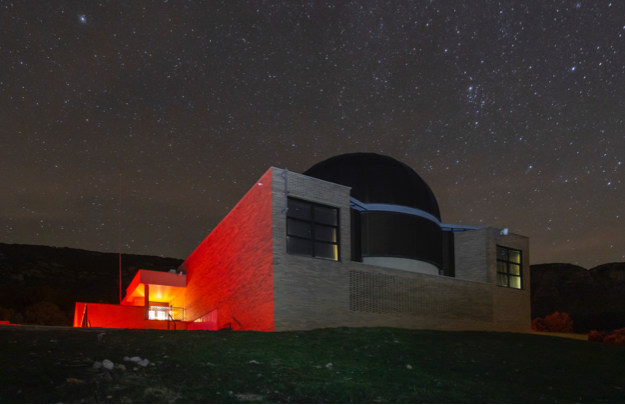
Camí del Coll d'Ares, s/n25691 Àger, Lleida
View on google mapsSegueix-nos
Enllaços als perfils del Parc Astronòmic a Facebook, X, Instagram i YouTube.

WHAT ARE YOU GOING TO SEARCH?
Presentació de l’inici de la temporada 2026, amb activitats centrades en l’eclipsi total de Sol
- 4 February, 2026
Tallers i sessions especials al planetari per explicar les peculiaritats d’un eclipsi solar, així com l’ampliació dels horaris per les visites de grups concertades, són algunes de les novetats d’aquesta nova temporada.
El Parc Astronòmic del Montsec, gestionat per Ferrocarrils de la Generalitat de Catalunya (FGC), inicia la temporada 2026 aquest divendres amb un conjunt de novetats que estaran centrades, sobretot, a explicar, difondre i fer pedagogia de l’eclipsi total de Sol que viurà Catalunya aquest mes d’agost, un fenomen que no es produeix des de fa 120 anys. Tot i que la totalitat es podrà observar des del sud del país, especialment a les Terres de l’Ebre i al Camp de Tarragona, aquest fenomen és únic i desperta un gran interès no només entre els amants de l’astronomia sinó a tota la població en general.
L’Astronòmic ofereix tot tipus d’activitats divulgatives, tallers i sessions especials al planetari per explicar les peculiaritats d’un eclipsi solar i ajudar tothom a planificar l’observació des de les zones on serà complet.
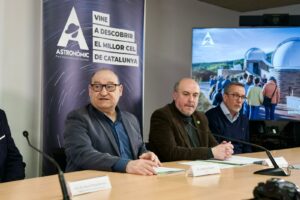
Presentació de les novetats de la temporada 2026
Totes les novetats de 2026 les han explicat avui a Lleida el president de Ferrocarrils, Carles Ruiz Novella, i el gerent del Parc Astronòmic del Montsec (PAM), Salvador J. Ribas Rubio, acompanyats del president del Consell Comarcal de la Noguera, Miquel Plensa Martínez.
A partir d’aquest divendres, doncs, a les sessions diürnes generals i familiars es farà pedagogia de l’eclipsi del 12 d’agost indicant com s’ha d’observar, on es podrà observar i les mesures de seguretat que s’han de tenir en compte a l’hora de mirar un eclipsi solar. Per tant, a més de l’observació es farà èmfasi en les tècniques perquè els visitants puguin estar preparats.
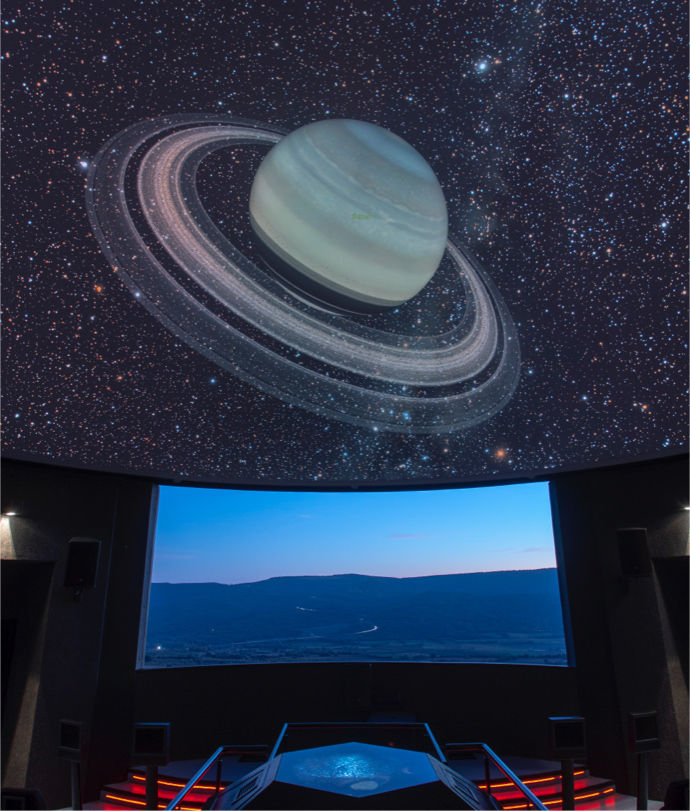
A més, a partir del juny, a les visites nocturnes generals 2D s’estrenarà una nova projecció anomenada 3clipse, un viatge immersiu que explica, d’una manera entenedora i visualment espectacular, el trienni extraordinari d’eclipsis de Sol del 2026, 2027 i 2028, l’únic que serà completament visible a la península Ibèrica. A través del diàleg entre una àvia i la seva neta, el film combina ciència, història i cultura, mostrant com els eclipsis han fascinat la humanitat al llarg dels segles i convidant els espectadors a viure’ls amb seguretat i emoció.
Tot i que al món hi ha eclipsis totals cada any i mig, la franja on es veuen és molt estreta i des d’un mateix lloc només es pot gaudir d’aquest espectacle cada diversos segles. En aquest cas, la totalitat es podrà observar especialment des de les Terres de l’Ebre i el Camp de Tarragona, amb una durada màxima d’un minut i mig i el Sol molt baix a l’horitzó, fet que farà imprescindible escollir bé el punt d’observació.
A més de l’espectacle visual, un eclipsi total és una finestra única per a la ciència. Durant aquests breus minuts es pot observar la corona solar, la capa externa del Sol, que normalment queda oculta per la seva brillantor. També es registren canvis sobtats en la llum i la temperatura, que afecten el comportament de la fauna i la flora. Per als astrònoms, és una ocasió per estudiar fenòmens com les protuberàncies solars i millorar la comprensió de l’activitat estel·lar. Tot plegat converteix l’eclipsi en molt més que un espectacle: és una oportunitat per connectar amb la natura i la ciència alhora.
Ruiz ha destacat que l’eclipsi és un “fenomen únic i excepcional, no només per a la població general sinó també en l’àmbit científic”. “Des del PAM, un equipament de referència en la divulgació de l’astronomia, posem tots els recursos per garantir que la ciutadania pugui contemplar l’eclipsi amb totes les garanties”, ha explicat.
El nou radiotelescopi
Aquest 2026 també començaran les sessions obertes amb el nou radiotelescopi del PAM. Serà a partir de la primavera quan s’oferirà tant a les persones visitants com per a les sessions de pràctiques dels alumnes de la Universitat. El PAM és el primer centre de divulgació de l’astronomia en comptar amb aquesta instal·lació, que permet observar el cel en altres rangs d’energia, fins i tot amb núvols, i serà especialment útil per a l’observació solar durant les visites diürnes. Un radiotelescopi permet observar el firmament amb un tipus de llum diferent de la visible: les ones de ràdio. Permet observar els objectes més intensos tant de dia com de nit i fins i tot en condicions meteorològiques adverses.
La incorporació d’aquesta infraestructura és un dels projectes guanyadors dels Pressupostos Participatius d’FGC de l’any 2024. Amb el procés de pressupostos participatius, Ferrocarrils implica i fa protagonistes els diferents grups d’interès de la companyia, tan interns com externs, en la decisió sobre una part del seu pressupost d’inversió.
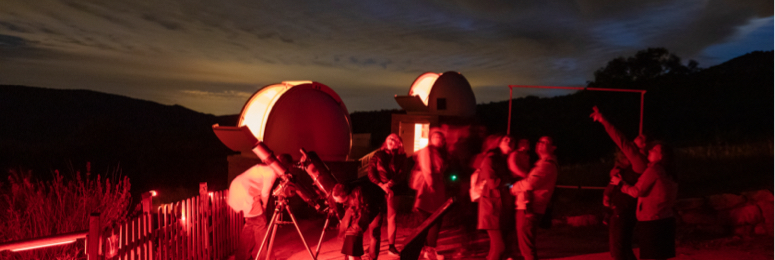
El radiotelescopi és de 3 metres de diàmetre i està instal·lat al Parc de Telescopis del PAM, que és l’espai reservat per a l’observació del firmament, tant de nit com de dia. Està format per tres edificis amb cúpules astronòmiques i espai per a la instal·lació dels telescopis portàtils de l’Astronòmic.
Més grups d’escolars
La tercera novetat, és l’ampliació dels horaris per a les visites de grups, especialment d’escolars. Fins ara, es feien de dimarts a dijous i ara s’habilita també els dilluns. “L’any passat vam tenir prop de 4.500 alumnes catalans, i vam haver de deixar grups fora perquè aquest és el màxim que podem acollir. Per això, enguany obrim un dia més i així podem donar cobertura a la creixent demanda d’aquest col·lectiu, especialment en períodes de primavera i tardor”, ha detallat Carles Ruiz a la presentació.
Altres activitats
A més d’aquestes novetats, el Parc Astronòmic del Montsec prepara moltes més activitats de cara a aquest 2026. Les principals són:
– A partir d’aquest divendres, i amb motiu del Dia de la Dona i la Nena en la Ciència, es projectarà un curtmetratge de 7 minuts que ret homenatge a Maria Assumpció Català i Poch, primera astrònoma professional d’una universitat espanyola. El film, que es podrà veure durant tot el 2026, repassa la seva trajectòria des dels inicis fins al seu paper clau en la recerca astronòmica.
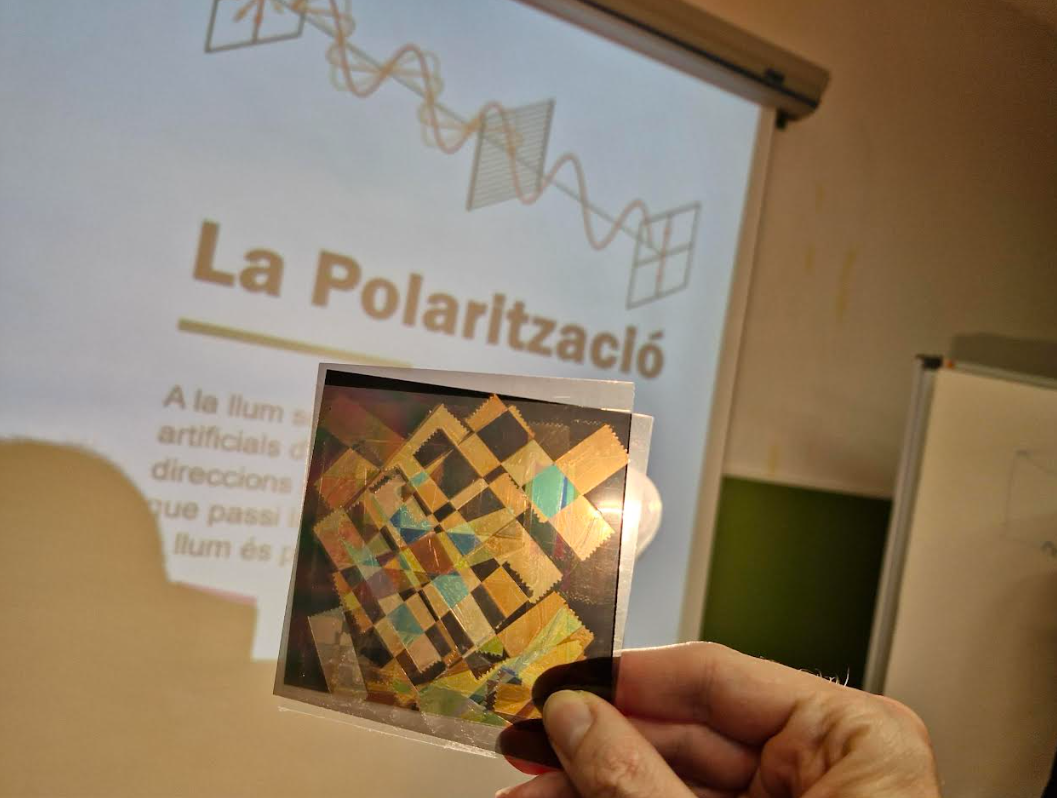
– També amb motiu de l’any Gaudí, s’ha creat un taller anomenat “Mosaics de Llum”. És un taller familiar d’òptica màgica que aprofita les làmines polaritzades per crear mosaics i vitralls dinàmics que canvien segons la llum i l’orientació. Inspirant-se en el trencadís de Gaudí, les persones que hi participen podran jugar amb color, simetria i textura mentre descobreixen conceptes d’òptica de manera amena i creativa.
– A la primavera es podrà veure la nova exposició “100 anys d’història dels Planetaris”, per celebrar elcentenari del primer planetari modern, inaugurat el 1925 al Deutsches Museum de Munic. La mostra, que ha itinerant arreu del món, repassa un segle d’evolució tecnològica i cultural d’aquests espais únics de divulgació científica. L’exposició arriba aquest 2026 al PAM.
– Activitat combinada Ioga + visita nocturna + maridatge productes territori. Es farà un cop al mes durant els mesos de maig, juny, juliol i agost.
– Activitats d’observació en altres emplaçaments de Ferrocarrils. Des de fa dos anys, i un cop al mes, es fan sessions d’observació del cel a l’estació de muntanya de Vall de Núria. Aquest 2026, s’estenen també a Boí Taüll.
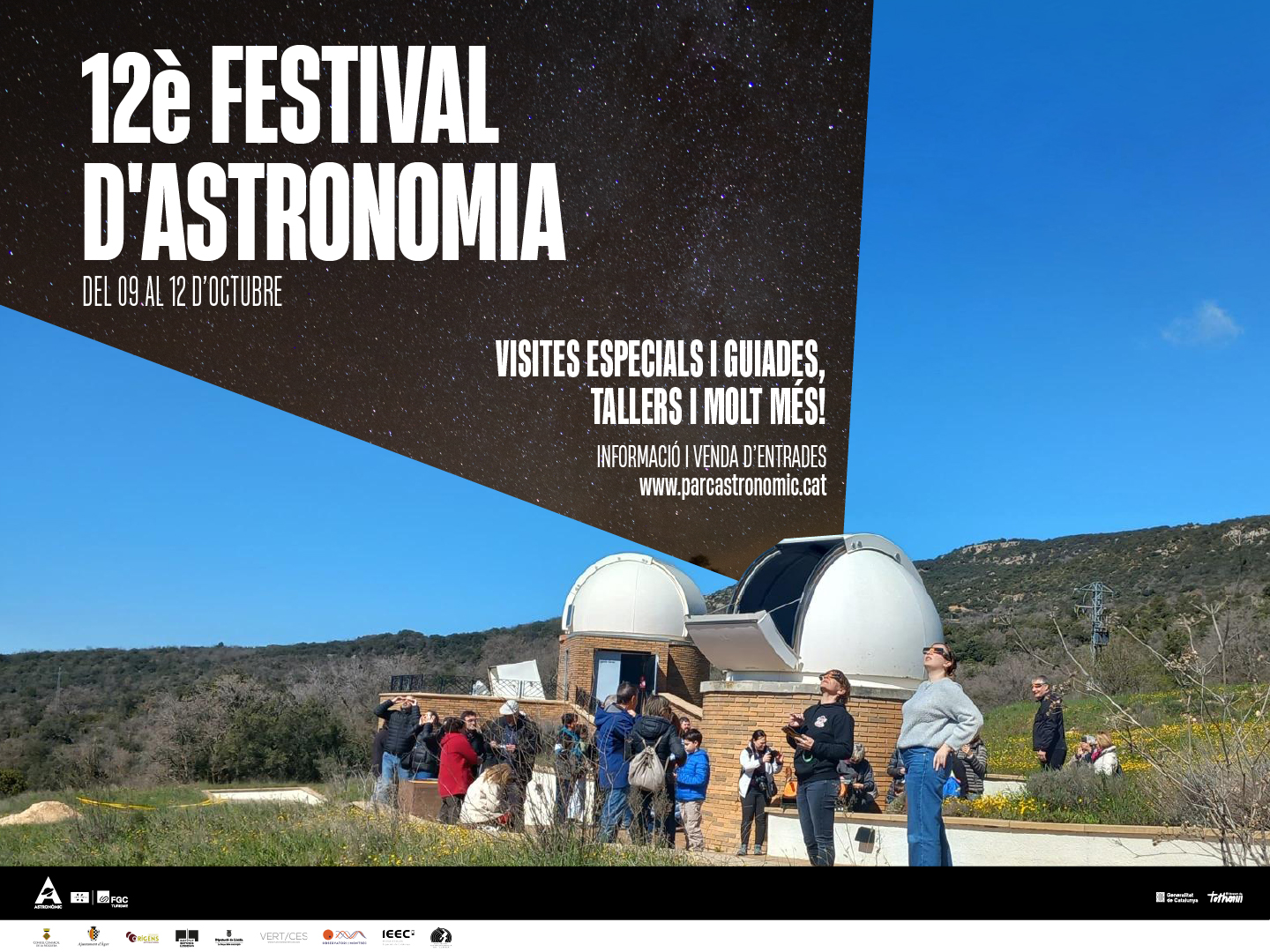
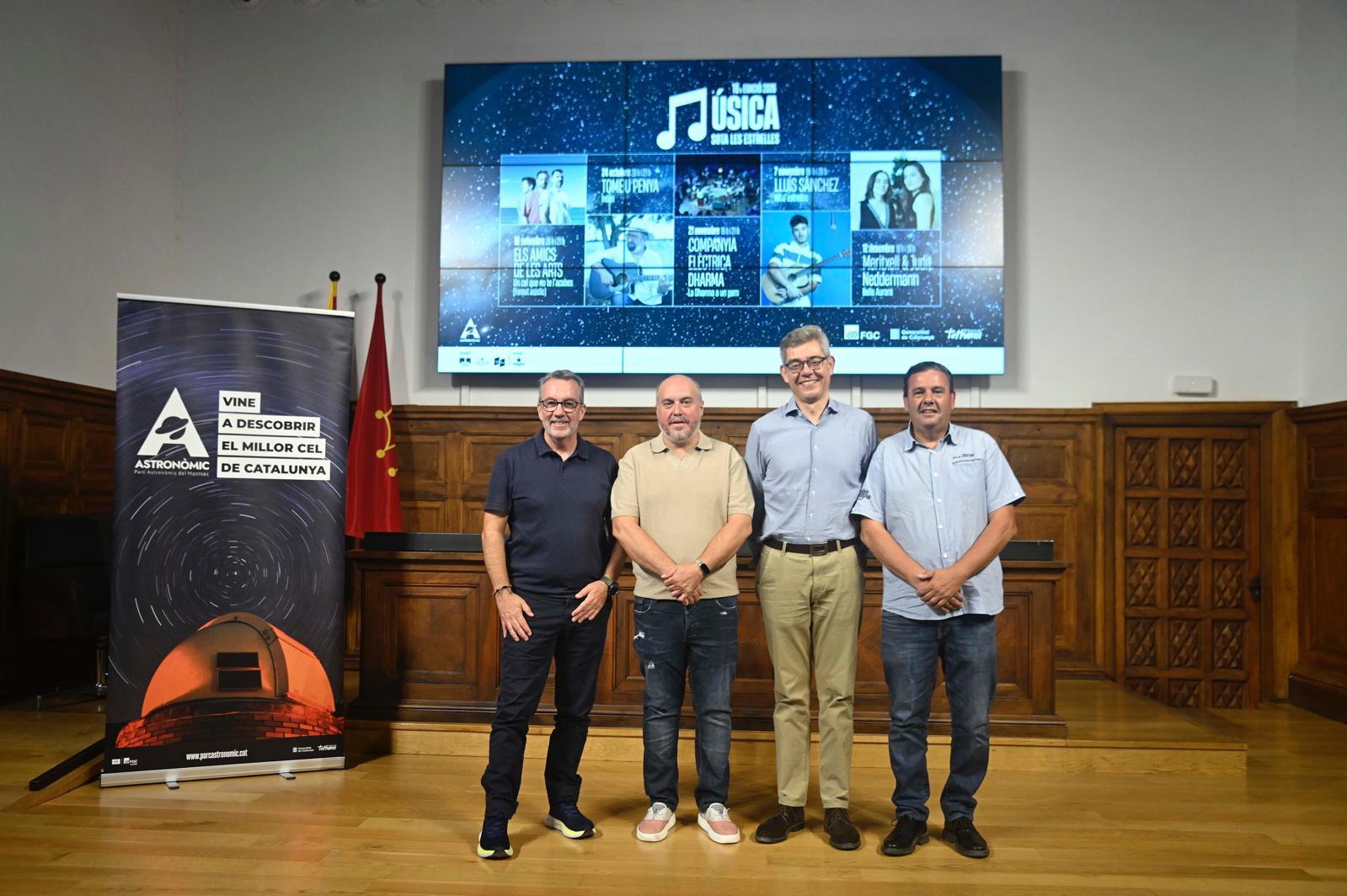
– A més, el PAM manté les tres activitats singulars que es realitzen cada any. D’una banda, el Cicle de música sota les estrelles, que es farà entre finals d’estiu i la tardor. Serà ja la 16a edició. De l’altra, el Festival d’Astronomia, que enguany arriba a la 12a edició i es farà del 10 al 12 d’octubre. I finalment, la 3a edició de Nadal a l’Astronòmic.
tags
Documents
Links of interest
Other News
-

- 6 October, 2026
- Festivals
-
- 14 September, 2026
-
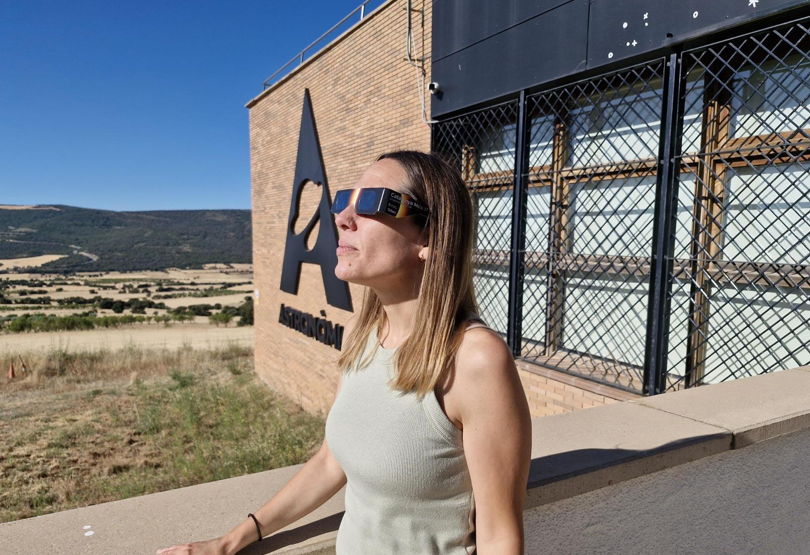
- 6 August, 2026
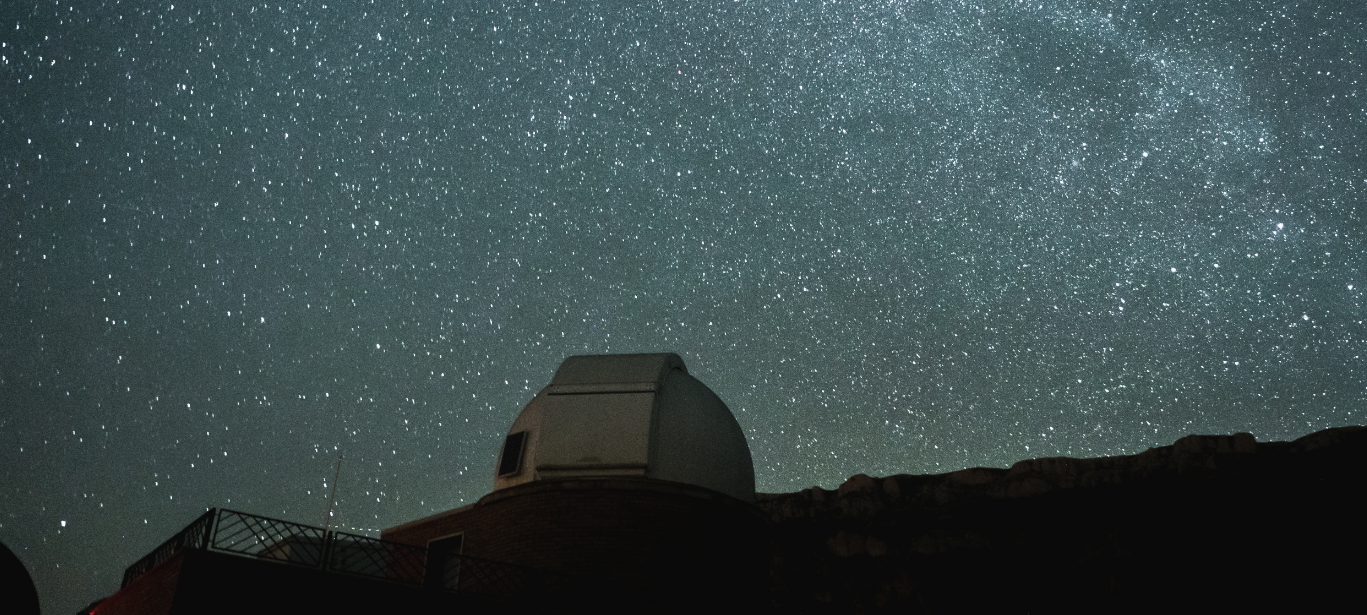
Did you know that the #SerradelMontsec is a declared space Reserve Starlight?
Sponsors











-
Dades predicció meteorològica:

-
Dades observació:

Dades de predicció
- Matí: Entre poc i mig ennuvolat
- Tarda: Sol i núvols alts
- Màx: 20ºC
- Min: 9ºC
Dades observació
- No hi ha dades d'observacio disponibles
- Temperatura: 11.1ºC
- Humitat: 89%
- Vent: SSW 6.4 km/h
- UV: 0.0
- Radiació Solar: 63 W/m2

Infoparc
Tuesday 20, October 2026
EXPOSICIONS PERMANENTS
-
Sala
Univers -
Sala
Starlight
EXPOSICIONS
TEMPORALS
-
3CLIPSE