




- Experiences
-

- Experiences
-
- Experiences
-


- Experiences
-
- Optional
-
- Experiences
-
- Unique Experiences
- Unique Experiences
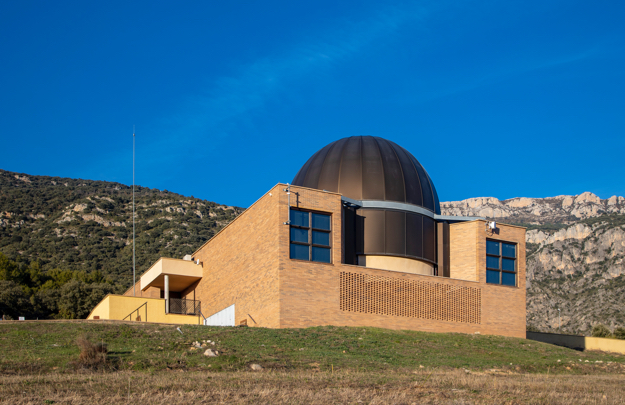

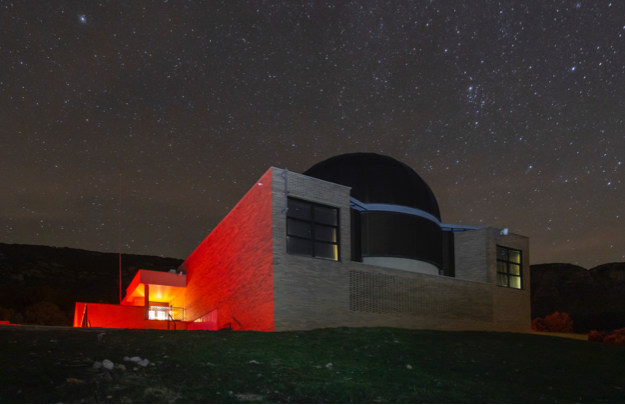
Camí del Coll d'Ares, s/n25691 Àger, Lleida
View on google mapsSegueix-nos
Enllaços als perfils del Parc Astronòmic a Facebook, X, Instagram i YouTube.

WHAT ARE YOU GOING TO SEARCH?
Moments of darkness
- 19 May, 2026
- Astronomia

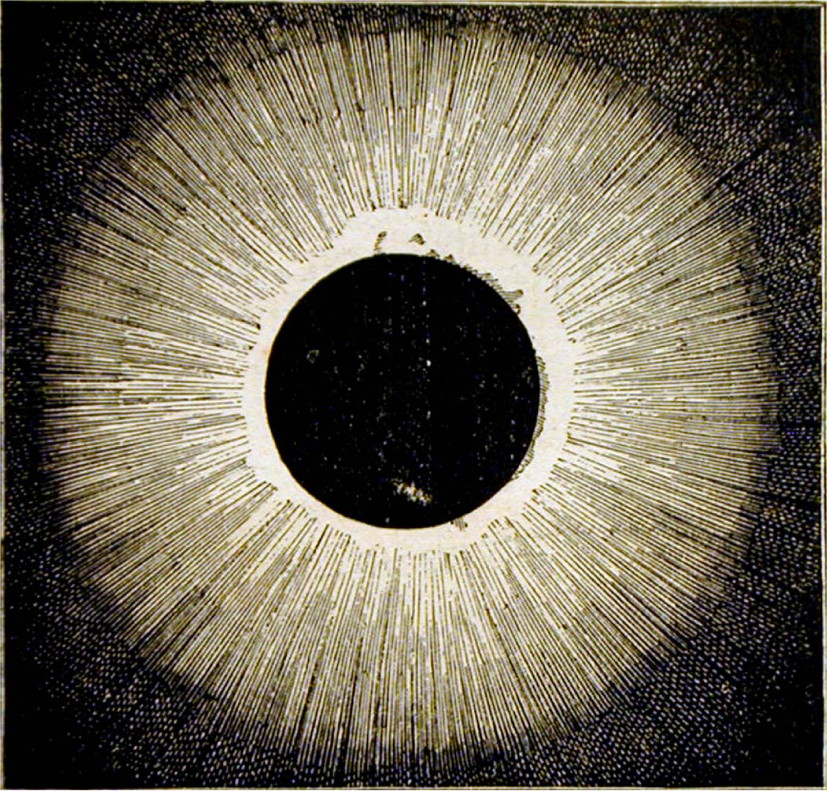
Illustration accompanying the “Did you know…” article published in 1894
By Salvador J. Ribas
As the months draw us closer to the big day on 12 August, anticipation for the total solar eclipse is building. So far, we’ve talked about the technical preparations and how to find the ideal vantage point, but today we want to focus on what we’ll actually experience. What happens during those moments of total darkness? What sensations will this unique phenomenon bring?
An eerie, metallic atmosphere
The path to totality begins subtly. As the Moon gradually covers the Sun, the ambient light does not dim as it does during a conventional sunset. The sky above our heads begins to darken, but the horizon still retains some light.
This combination creates an atmosphere that is hard to describe: the landscape loses its usual colours and everything takes on a metallic hue. The light grows colder, the shadows become more defined, and the silence—or the exclamations of those with us—lends the moment an eerie quality.
The pivotal moment: The Sun disappears
When we finally reach the totality phase—a few minutes that always seem shorter than the clock suggests—the change is complete. It is at this very moment that we can take off our sunglasses to see what the daylight usually hides from us.
Where once there was a dazzling disc, a black silhouette appears, surrounded by a soft, delicate glow: the solar corona. Around it, we can make out small reddish prominences from the chromosphere and, surprisingly, the brightest stars and planets become visible in a sky that takes on a nocturnal depth in broad daylight.
A fleeting yet profound experience
This phenomenon has elicited all manner of reactions throughout history, ranging from fascination and fear to pure scientific curiosity. But the totality is, by definition, fleeting. In a matter of moments, the first rays of the Sun’s photosphere will reappear, the corona will fade from view, and daylight will return, leaving us with the memory of a truly special experience.
Did you know that…?
Just before and after totality, if you look closely at light-coloured surfaces such as the ground or a wall, you will see wavy, blurred shapes moving rapidly. These are known as ‘shadow bands’, an effect caused by turbulence in the Earth’s atmosphere that distorts sunlight in its final moments. They are one of the most fascinating and difficult-to-capture details of the entire eclipse.
tags
- Astronomia
- Per Salvador J. Ribas
Documents
Links of interest
RELATED POSTS
-


- 28 September, 2026
‘Viking to Mars’: a journey back in time to the early days of the search for life on the Red Planet
-
- 21 July, 2026
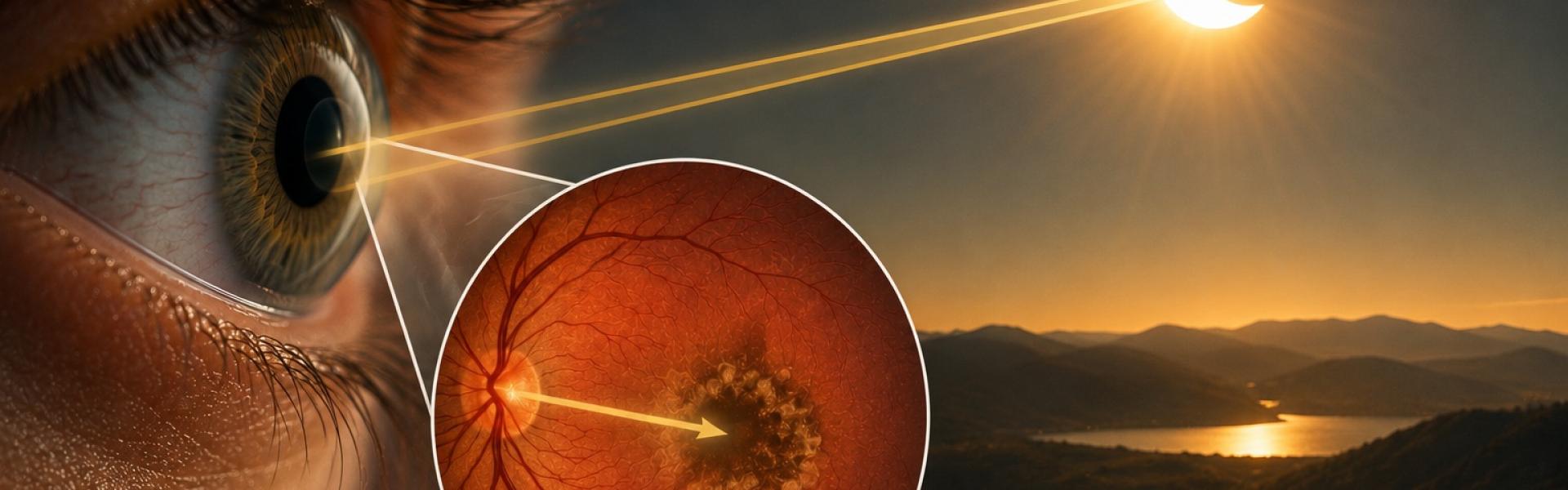
Viewing the Solar eclipse safely: how to enjoy the phenomenon of the century without harming your eyesight
-
- 17 June, 2026
The solar corona: the ethereal mystery that will take center stage during the August 12 eclipse
Did you know that the #SerradelMontsec is a declared space Reserve Starlight?
Sponsors











-
Dades predicció meteorològica:

-
Dades observació:

Dades de predicció
- Matí: Sol i núvols alts
- Tarda: Sol i núvols alts
- Màx: 25ºC
- Min: 13ºC
Dades observació
- No hi ha dades d'observacio disponibles
- Temperatura: 18.4ºC
- Humitat: 67%
- Vent: NE 3.2 km/h
- UV: 0.0

Infoparc
Monday 12, October 2026
EXPOSICIONS PERMANENTS
-
Sala
Univers -
Sala
Starlight
EXPOSICIONS
TEMPORALS
-
3CLIPSE