




- Experiences
-

- Experiences
-
- Experiences
-


- Experiences
-
- Experiences
-
- Unique Experiences

- Unique Experiences

Camí del Coll d'Ares, s/n25691 Àger, Lleida
View on google mapsSegueix-nos
Enllaços als perfils del Parc Astronòmic a Facebook, X, Instagram i YouTube.

WHAT ARE YOU GOING TO SEARCH?
The solar corona: the ethereal mystery that will take center stage during the August 12 eclipse
- 17 June, 2026
- Novetats
By Salvador J. Ribas
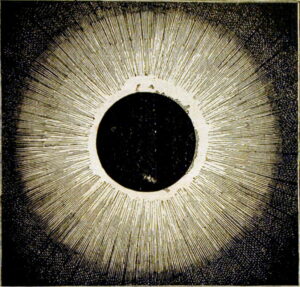
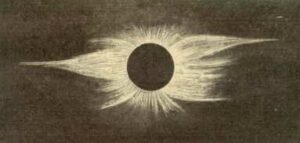
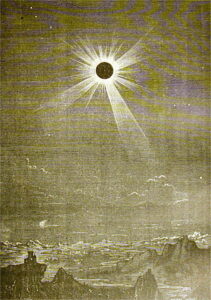
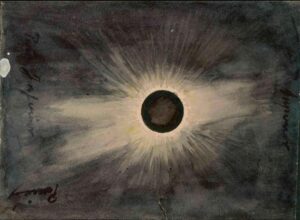
During the few minutes that a total solar eclipse lasts, when the Moon completely covers the Sun, a visual miracle occurs: the appearance of the solar corona. This faint, filamentous, and delicate glow is, for many, the most impressive moment of the entire phenomenon, transforming the solar disk into an absolutely fascinating white, diffuse halo.
A mystery that baffled the scientific community
The halo we now gaze upon with wonder was, for centuries, a source of great confusion for astronomers and navigators. In the past, many scientists believed it was a type of lunar atmosphere or even a simple optical illusion caused by our eyes in the sudden darkness. The challenge was that the corona could only be observed for a few minutes, disappearing immediately after totality.
It wasn’t until the 18th century that the Spanish navigator and scientist Antonio de Ulloa produced one of the first detailed depictions, demonstrating that this light formed a distinct shape around the Sun rather than the Moon. In the 19th century, the advent of photography and spectroscopy made it possible to confirm that the corona is composed of extremely hot gas that extends millions of kilometers into space.
The temperature paradox
Even today, the solar corona continues to pose fascinating questions for modern physics. One of the most surprising facts is that its temperature is much higher than that of the Sun’s surface, a phenomenon that scientists are still trying to fully explain and that reminds us that the Sun still holds secrets waiting to be discovered.
A date with history: August 12
When the eclipse occurs on August 12, the corona will undoubtedly be the star of the show in the sky. Although the Sun’s low elevation at that time may pose a challenge for observation, we are certain it will treat us to spectacular views. It will be the same mysterious light that has fascinated humanity for centuries.
Did you know that…?
The myth of “Coronio”
During the 19th century, some astronomers came to believe that the corona contained an unknown chemical element, which they named “coronio.” Years later, it was discovered that this element did not exist: what they had observed was actually highly ionized iron, heated to temperatures of millions of degrees.
tags
Documents
Links of interest
RELATED POSTS
-


- 28 September, 2026
‘Viking to Mars’: a journey back in time to the early days of the search for life on the Red Planet
-

- 21 July, 2026
Viewing the Solar eclipse safely: how to enjoy the phenomenon of the century without harming your eyesight
-

- 22 May, 2026
“The Day the Moon Will Hide the Sun”: Salvador J. Ribas brings the great eclipse to the University of Lleida
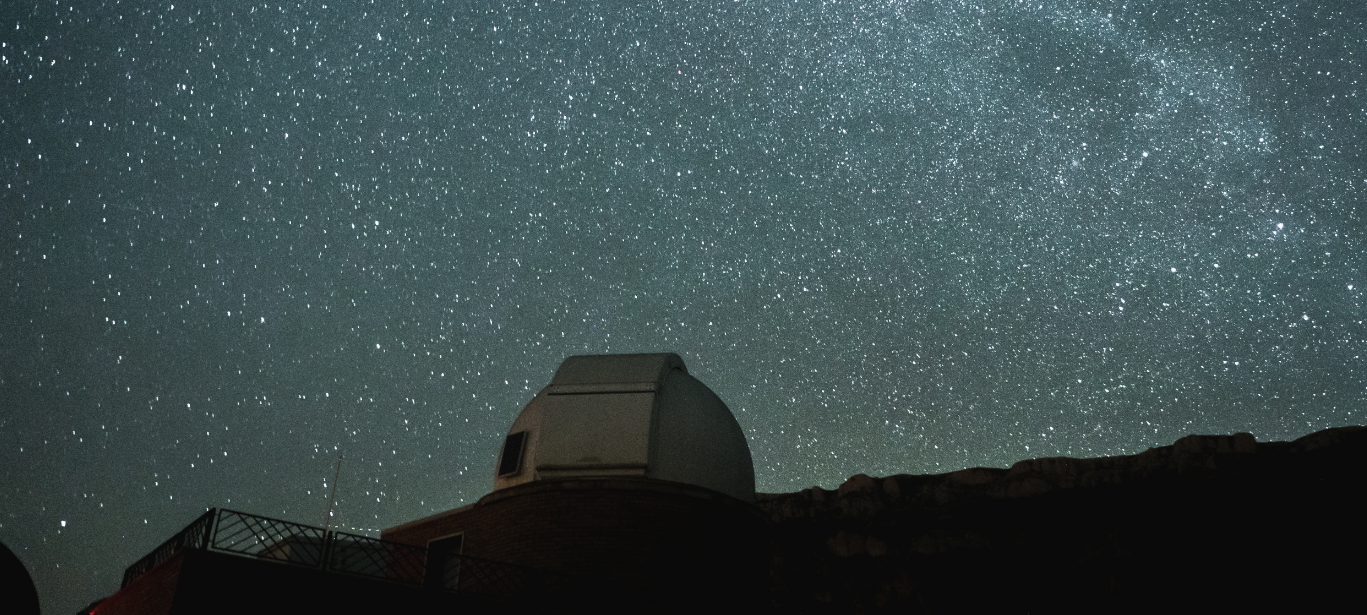
Did you know that the #SerradelMontsec is a declared space Reserve Starlight?
Sponsors











-
Dades predicció meteorològica:

-
Dades observació:

Dades de predicció
- Matí: Entre poc i mig ennuvolat
- Tarda: Sol i núvols alts
- Màx: 20ºC
- Min: 9ºC
Dades observació
- No hi ha dades d'observacio disponibles
- Temperatura: 11.0ºC
- Humitat: 89%
- Vent: W 8.0 km/h
- UV: 0.5
- Radiació Solar: 77 W/m2

Infoparc
Tuesday 20, October 2026
EXPOSICIONS PERMANENTS
-
Sala
Univers -
Sala
Starlight
EXPOSICIONS
TEMPORALS
-
3CLIPSE